You approved a design proof. The colors looked perfect on screen. Then the printed piece arrives. The blue is off, and the reds feel muddy. Your client notices immediately. Now you’re facing a costly reprint, lost press time and an uncomfortable conversation about why the final product doesn’t match what they signed off on.
Sound familiar? You’re not alone. Color inconsistency is one of the most common challenges in print production. But luckily, it’s solvable. Color management software helps you nail jobs on the first run and protect your margin on more prints.
Explore the role of color management software in printing, how it works and how it directly impacts your profitability and client satisfaction.
The fundamental problem is that your monitor and your press speak different languages. They interpret color differently, and without a translator, miscommunication is inevitable.
The two systems at odds are:
The trouble is that while RGB color is great for digital pieces, physical printing has to happen in CMYK. What you see literally isn’t what you get.
This discrepancy is just the beginning. Every device in your workflow has a different color gamut, or range of colors it can reproduce. A designer might approve a vibrant blue on a wide-gamut monitor that your press can’t match. This mismatch may occur regardless of experience or skill.
Without a color management system coordinating these differences, inconsistency becomes the default outcome. Understanding the fundamentals of color theory is essential, but theory alone won’t solve the workflow challenge.
“Close enough” color might seem acceptable in the moment. But it’s quietly eroding your profitability in ways that add up fast.
Here’s what inconsistent color actually costs you:
So what separates shops that consistently nail color from those constantly fighting it? It’s a system and the right tools, like color management software.
The role of color management software is to act as the central, authoritative hub for all color information across your entire workflow. It establishes a standardized process that every person and device can rely on, replacing subjective visual checks with objective, data-driven decisions.
Here’s what that looks like in practice. The software performs three core functions that work together to create predictable, repeatable color — calibration, profiling and conversion. They’re interconnected steps in a single, unified system designed to eliminate guesswork and ensure what you see really is what you get.
Let’s break down how the software works. No jargon, just the essentials that matter to your operation.
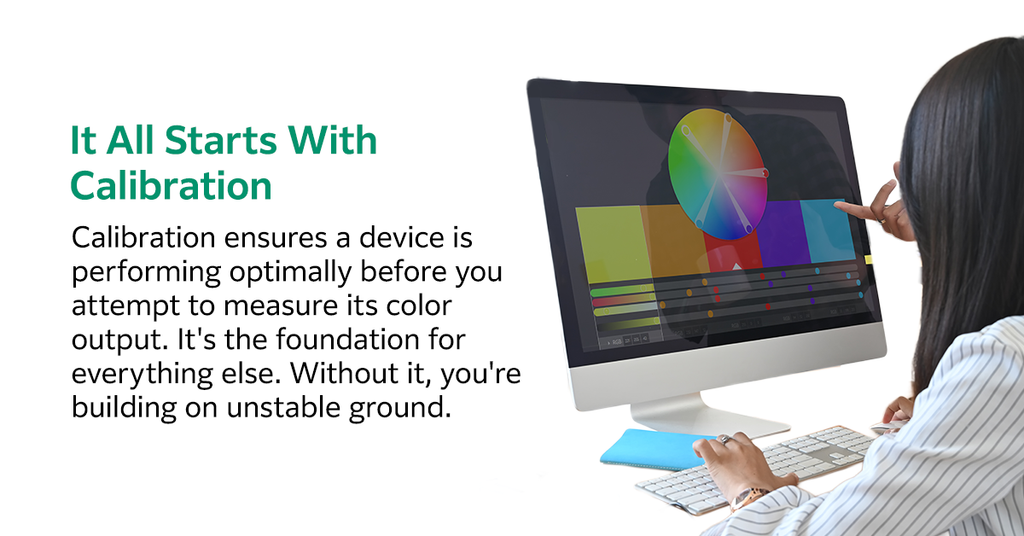
Calibration brings each device to a known, stable and consistent state. Think of it like tuning an instrument before a concert. You wouldn’t expect a guitar to sound right if it’s out of tune, and you can’t expect a monitor or press to reproduce color accurately if it’s drifting from its baseline performance.
Calibration ensures a device is performing optimally before you attempt to measure its color output. It’s the foundation for everything else. Without it, you’re building on unstable ground.
Once a piece of equipment is calibrated, profiling measures exactly how it reproduces color. This process creates an ICC profile — a snapshot of your device’s unique fingerprint.
An ICC profile accurately describes color, so the software knows what it’s working with. Every device gets its own profile. Profiling is especially critical when working with modern production presses, where precise color output depends on understanding each device’s unique characteristics.
This is where the magic happens. The software uses ICC profiles to intelligently translate a file’s colors from one device’s color space to another while maintaining the visual appearance as closely as possible.
This profile-to-profile conversion is the final step that ensures the color intended by the designer is the color that comes off the press. The software can account for gamut limitations, substrate differences and ink behavior. It’s the translator who helps everyone speak the same language.
Investing in color management software is a business decision with a clear ROI. Let’s connect the dots between better color and real growth.
A predictable workflow means getting color right the first time. That directly translates to less wasted ink, less wasted substrate and fewer hours spent on reprints. This is the most immediate and tangible financial benefit of color management software. You’ll have fewer do-overs and better overall revenue.
For brands, color is nonnegotiable. A retailer’s signature red needs to look identical whether it’s on a banner, a brochure or a box. Consistent color ensures a client’s brand is represented correctly every time, building trust and leading to long-term partnerships and loyalty. Being the printer that can deliver consistent color accuracy makes you a more valuable and reliable partner.
The benefits of color management software extend beyond color itself — they touch every part of your operation. Modern color management software integrates with other systems — from your monitors and printers to your clients’ devices — to automate processes that previously required manual connection.
For example, workflow automation can analyze a client’s previous orders to get their colors right when a new order comes in, saving your team time. Similarly, “ganging” tools can identify the optimal layout for getting the most output out of every piece of material.
Automation reduces the chance of human error, speeds up job onboarding and streamlines press setup. That frees up your staff for higher-value tasks and helps you handle more jobs without adding headcount.
Color management software plays the role of quality guarantor that ensures quality and consistency in your shop. At Fujifilm, we’ve engineered our solutions to deliver efficiency, profitability and consistency you can count on. ColorPath® SYNC™ is our cloud-based color management platform that gives you centralized control of all your devices from anywhere.
With the right system in place, you can make more profit, make more happy customers and make more time for growth.
Ready to see what’s possible? Contact us today to request a quote.


